Low-impact cardio without jumping
Low-impact cardio means one foot stays on the floor — it does not mean the workout is easy. Step-based dance cardio raises your heart rate into the same moderate zone as brisk walking or light jogging, with no jumping, no pounding through your knees, and almost no noise for anyone living below you. Here's how that works and who it's for.
Low-impact is not low-intensity
These two get mixed up constantly, and the confusion keeps people jumping when they'd rather not. Impact is the landing force that travels through your ankles, knees, and hips when your feet hit the ground — running and jump-based HIIT are high-impact by definition. Intensity is how hard your cardiovascular system is working, and it doesn't care whether you ever leave the floor.
A fast step-based dance session can push you to the same breathlessness as a jog while your joints experience little more than a purposeful walk. That's the whole trick — and it's why “I can't jump” is not a reason to skip cardio.
How to get your heart rate up without leaving the floor
Intensity without impact comes from four dials, and dance choreography turns all of them naturally:
- Bigger movements. A wide step-touch works far more muscle than a small one; deep steps and lunging patterns more still.
- Arms up. Anything above shoulder height raises heart rate quickly — dance uses arms constantly, not as an afterthought.
- Tempo. Moving to the beat keeps you at a steady, honest pace — the music doesn't let you drift into coasting.
- No standing around. Choreography flows from move to move, so your heart rate stays up the whole session instead of spiking and resting.
In practice these are ordinary, named moves — step-touches, grapevines, marches, low kicks, side lunges — strung together to music. Three or four sessions a week comfortably covers the standard guideline of about 150 minutes of moderate cardio.
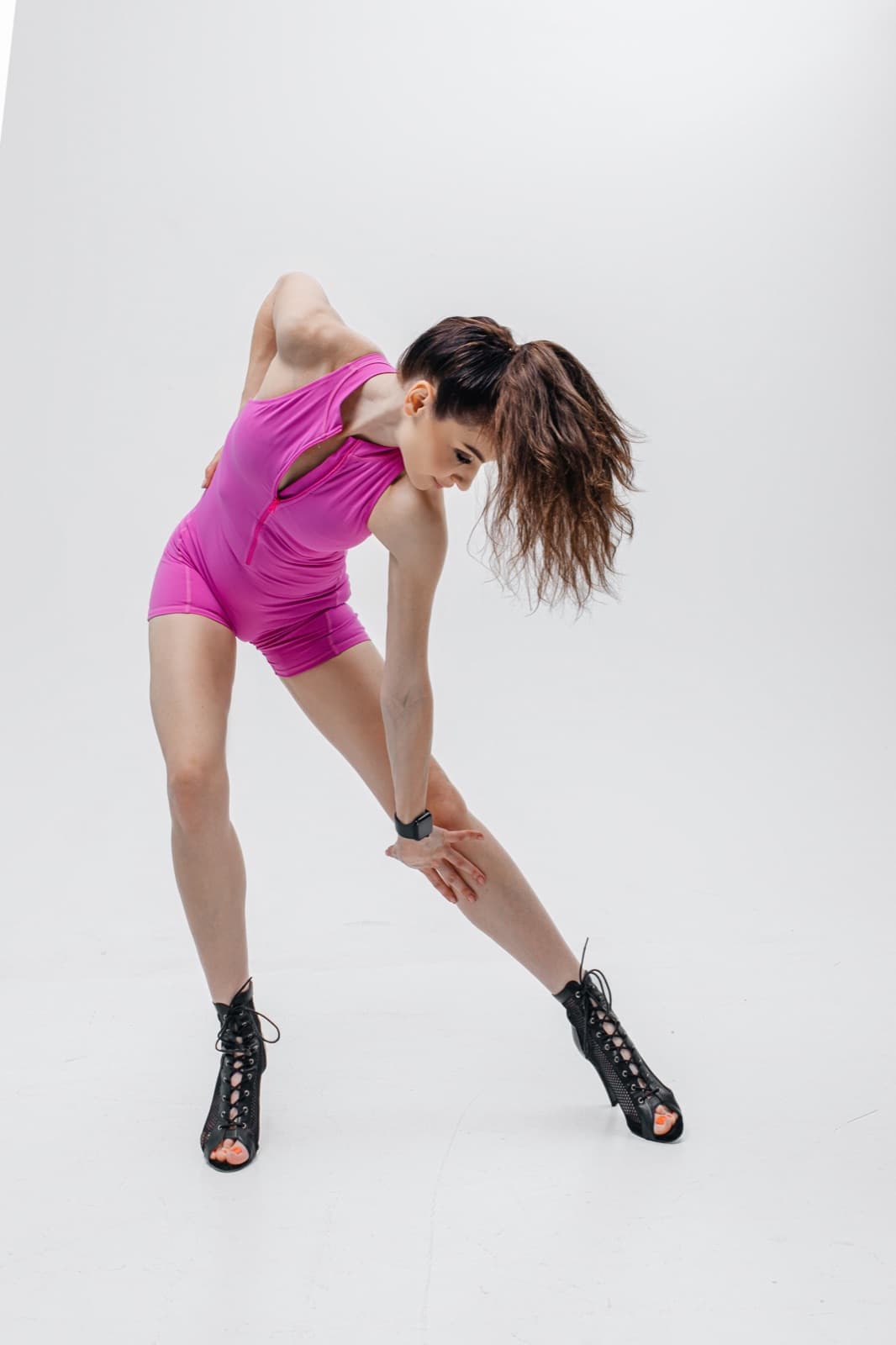
Kind to your knees — and your neighbors
Every jump ends in a landing, and landings send a multiple of your body weight through your joints — that's fine for healthy joints in sensible doses, but it's exactly what aching knees, your floor, and the people below it object to. Step-based cardio removes the landings entirely: no impact spikes for your joints, and nothing thudding through the ceiling downstairs. For apartment living that's the difference between training whenever you like and negotiating with your building.
Swimming, cycling, and the elliptical are low-impact too, and they're all good options. Dance's edge is logistical: it needs no pool, no bike, no machine — just floor space and a screen, which is why it's the one that survives busy weeks.
Who should still be careful
Low-impact is gentle, not magic. If you have an existing injury, joint disease like arthritis, or pain that shows up when you exercise, talk to a doctor or physiotherapist before starting anything new — including this. And within any workout, the rule is boring but reliable: soften or skip the specific move that hurts, and never train through sharp pain. Follow-along videos make that easy, because you can shrink any movement and stay with the session.

Check out the 21‑Day Dance Challenge
Short, beginner-friendly dance workouts you follow along at home, led by choreographer Anastasiia. The first session is free to watch — no sign-up, just press play and see how it feels.
See the ChallengeCommon questions
- What's the difference between low-impact and low-intensity?
- Impact is the force that goes through your joints when your feet hit the floor; intensity is how hard your heart and lungs are working. They're independent: a walk in the park is low-impact and low-intensity, while a fast step-based dance session is low-impact and genuinely moderate-to-high intensity. You can be gentle on your knees and still be out of breath.
- Can low-impact cardio help with weight loss?
- Yes — calorie burn follows intensity, not impact. A moderate step-based dance session burns roughly the same as any other moderate cardio (around 150–200 kcal per 30 minutes for most people). As always, weight loss depends mostly on food; the cardio supports it and improves fitness either way.
- Will my downstairs neighbors hear a no-jump dance workout?
- Step-based dancing is about as loud as someone walking around their flat — there are no landings, which are what actually travel through floors. If you skip the jumps (or the workout has none), you can train at any hour without being 'that' neighbor.
- Is dancing or walking better for sensitive knees?
- Both are low-impact and knee-friendly for most people. Dancing adds coordination, balance, and variety that walking doesn't, and it's easier to do in bad weather. Whichever you choose: soften or skip any specific move that hurts, and see a doctor about persistent pain rather than training through it.