Too embarrassed to dance — even alone at home?
Feeling watched when nobody is there isn't silly, and it isn't rare — it's a documented quirk of how minds work. Embarrassment doesn't need a real audience; an imagined one is enough, and dancing summons that imagined audience harder than almost any other exercise. The fix isn't a pep talk. It's a handful of format changes that quietly remove what triggers the feeling — and then repetition finishes the job.
The “solo audience” is a real phenomenon
Psychology has two well-established names for what's happening. The spotlight effect is our tendency to drastically overestimate how much other people notice about us. The imaginary audience is the mind's habit of simulating observers — running the “how do I look right now?” program even behind a locked door. Researchers studying embarrassment have found it doesn't require anyone actually present; the imagined audience is enough to produce the full blush.
So if you've ever started dancing in your kitchen and stopped two moves in feeling absurd — that wasn't evidence you're uniquely awkward. That was standard-issue human social software firing at the wrong moment.
Why dance feels more exposing than a squat
Nobody feels silly doing push-ups alone. That's because push-ups are judged by count, and dancing — in our heads — is judged by looks. Psychologists call the underlying habit self-objectification: viewing your own body from an imagined outside camera instead of from the inside. Expressive movement flips that camera on, which is why the feeling is “I look ridiculous” rather than “this is hard.” Mirrors make it worse — exercise research consistently finds mirrored rooms increase self-consciousness for beginners, which is worth remembering next time a workout video tells you to practice in front of one.
The tell that this is all framing: the same step done as “exercise” (a step-touch, a knee lift) feels completely fine. It's not the movement that's exposing. It's the word “dancing.”
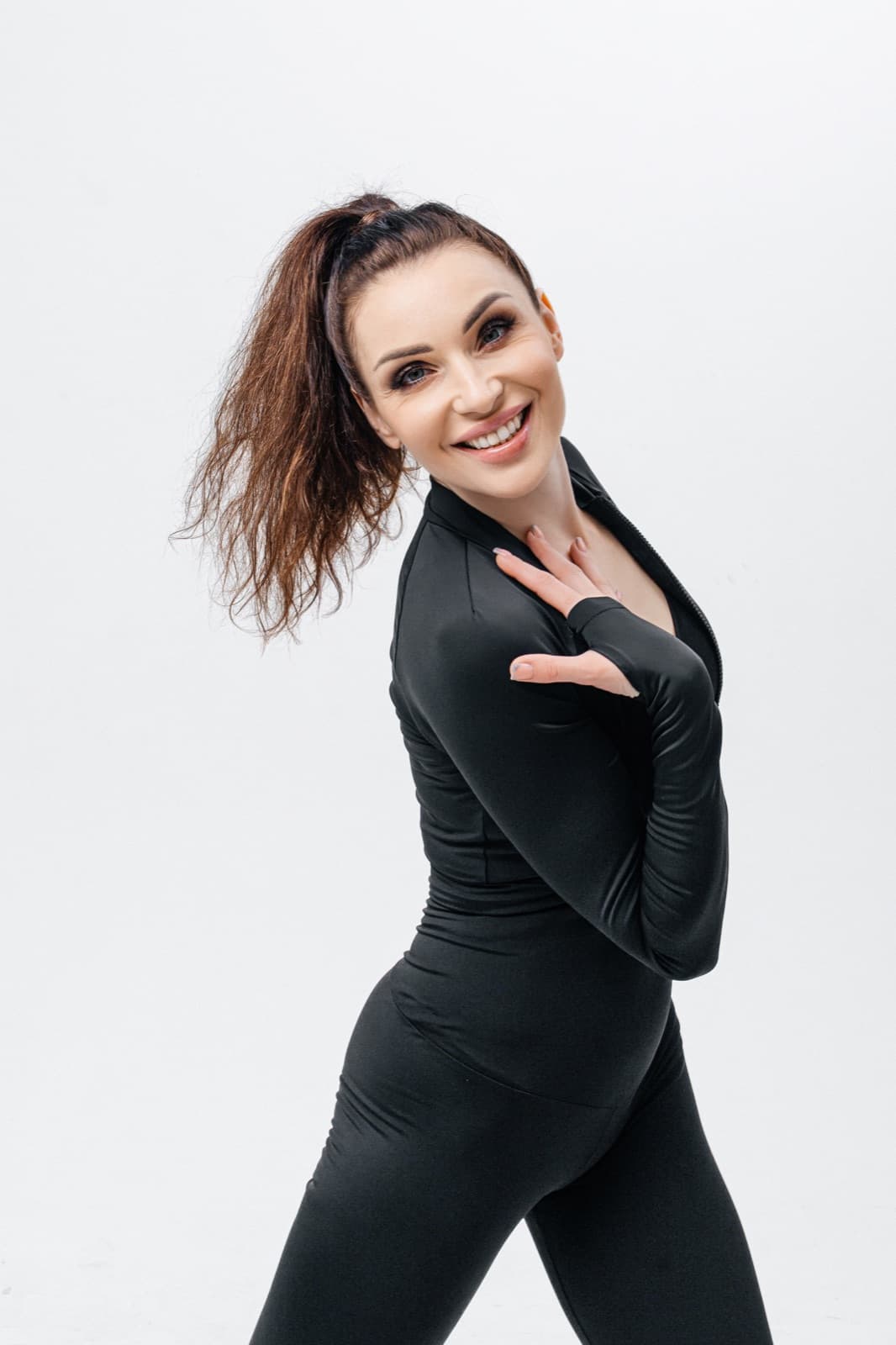
What actually kills the feeling
Not affirmations. Not “dance like nobody's watching” on a poster. What works is removing the triggers:
- Follow, don't perform. Copying an instructor points your attention outward — eyes on the screen, brain on the next move. The self-watching that fuels embarrassment needs attention to run on; a follow-along starves it.
- Skip the mirror. You don't need one to follow a video — and without it, the outside camera has nothing to look through.
- Close the actual door. Trivial, but the imagined audience quiets down when the real-world possibility of being walked in on is zero.
- Music up. Loud enough to follow the beat and the room stops feeling like a stage and starts feeling like the workout it is.
What the first sessions honestly feel like
Minute one still feels a little absurd — expect that, and start anyway. By minute ten you're too busy keeping up to spectate yourself; that's the follow-along format doing its job. Session by session the absurdity shrinks, not because you talked yourself into confidence but because familiarity starved the feeling out. Most people find it's simply gone within a handful of sessions — replaced, somewhat annoyingly, by the discovery that dancing in your living room is fun, which is the thing the embarrassment was standing in front of all along.
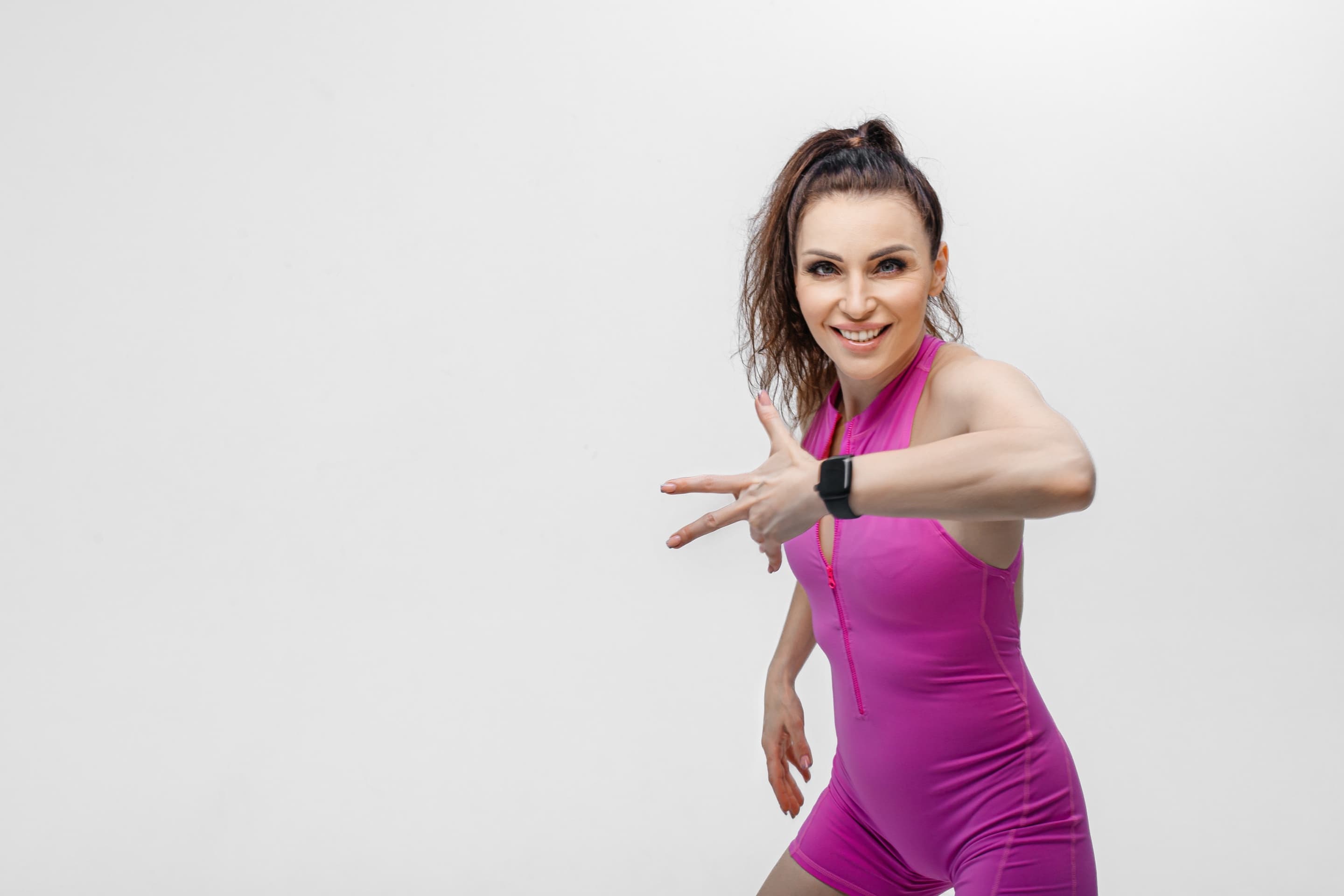
Check out the 21‑Day Dance Challenge
Short, beginner-friendly dance workouts you follow along at home, led by choreographer Anastasiia. The first session is free to watch — no sign-up, just press play and see how it feels.
See the ChallengeCommon questions
- Is it normal to feel embarrassed dancing alone at home?
- Completely. Psychologists have names for it — the 'spotlight effect' (we overestimate how much others notice us) and the 'imaginary audience' (the mind simulates observers even when none exist). Feeling silly dancing alone doesn't mean anything is wrong with you; it means your brain is running its social software at the wrong moment.
- Why do I feel watched when nobody is there?
- Because embarrassment doesn't actually require an audience — research on the emotion shows an imagined one is enough. Your mind keeps a lifelong habit of picturing how you look from the outside, and unfamiliar, expressive movement like dancing switches that habit on hard. It's a normal cognitive bias, and it weakens with repetition.
- Does this mean I have social anxiety?
- Feeling self-conscious about dancing is normal-range self-consciousness, not a disorder — nearly everyone has some version of it. Social anxiety is broader and more persistent, affecting many areas of life; if that sounds like your experience, talking to a professional is worthwhile. For the dancing itself, format changes usually do the job.
- Will the embarrassment go away on its own?
- With repetition, yes — and faster than you'd expect. The feeling is strongest in the first minutes of the first session and fades as the movement becomes familiar; most people report it's mostly gone within a handful of sessions. What doesn't work is waiting to feel confident before starting — the confidence is a result of the reps, not a prerequisite.
- What makes follow-along workouts different?
- They change where your attention points. Dancing freestyle, your mind watches yourself — the exposing part. Following an instructor, your mind is busy copying: eyes on the screen, brain on the next move. There's no choreography to perform, no mirror required, and nothing to get 'right' in front of anyone. Attention outward is the practical cure for self-watching.