Dance workouts for people who “can't dance”
Here's the part nobody tells you: rhythm is a skill, not a birthright. True “beat deafness” is rare — what almost everyone means by “I have no rhythm” is timing that was never practiced. And a follow-along dance workout doesn't ask you to have it before you start: you borrow the instructor's timing until your own develops. Which it will.
Is rhythm something you're born with?
Partly — but not in the way you fear. Research on infant rhythm perception suggests that feeling a musical pulse is close to universal: even newborns show responses to a beat. What's not built in is the connection between hearing the beat and moving on it — that link is built by practice, the same way handwriting or typing was. Nobody performs on inborn talent alone; the people who look “naturally rhythmic” simply built the link earlier, usually as kids, and forgot they ever had to.
That reframe matters, because it changes the question from “do I have it?” (a verdict) to “have I practiced it yet?” (a starting line).
What “no rhythm” actually means
A genuine inability to synchronize movement to sound — beat deafness — is a real but rare condition. If you can tap a finger, nod, or clap along to a song you love, even imperfectly, you don't have it. What you have is untrained timing plus, usually, one bad memory: a wedding, a school disco, a Zumba class that moved too fast — a moment that got filed away as evidence of a permanent flaw.
It's worth saying plainly: one overwhelming group class proves nothing about you. Fast choreography with no repetition is hard for everyone untrained — the room just hides it better.
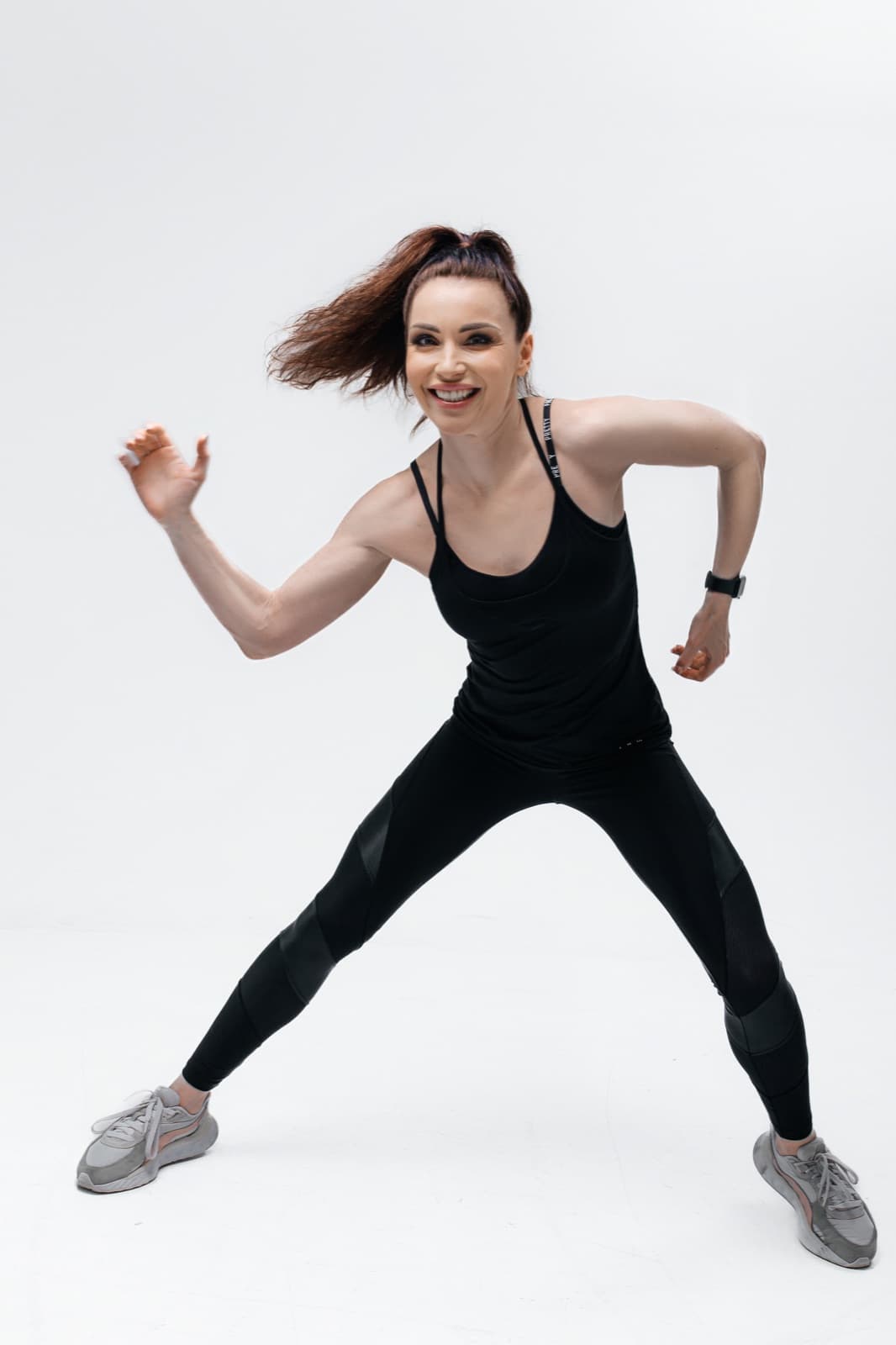
How timing is actually trained
Dance teachers train rhythm before they train choreography, and their methods are almost embarrassingly simple:
- Clap the count. Music for dance workouts runs in counts of eight. Clap or tap along with a few songs you love and you're already training the exact skill.
- Step, don't perform. The foundational move of dance fitness is a step-touch — a weight shift from foot to foot on the beat. It's synchronized walking. You have been rehearsing the hard part your whole life.
- One layer at a time. Feet first, arms later, both together last. Coordination isn't one skill but a stack of small ones, and stacking them is a method, not a gift.
- Repeat until boring. A move practiced past the point of thinking becomes automatic — your body stops waiting for permission from your brain. That's all “muscle memory” is.
A good follow-along workout builds all four in without telling you: the instructor carries the count, moves repeat many times, and layers arrive one at a time. You don't practice rhythm and then dance — the workout is the practice.
How long until you feel “in the beat”?
Faster than you think, slower than a montage. Session one is messy for everyone — expect to be half a beat behind and to laugh at yourself at least once. Within about two weeks of regular sessions, moves you fumbled start landing without thought; that's your coordination visibly improving, not luck. Feeling genuinely “in the beat” — anticipating moves instead of chasing them — typically takes a few weeks of repetition, and it keeps improving for as long as you keep showing up. There is no plateau at “clumsy.”
Check out the 21‑Day Dance Challenge
Short, beginner-friendly dance workouts you follow along at home, led by choreographer Anastasiia. The first session is free to watch — no sign-up, just press play and see how it feels.
See the ChallengeCommon questions
- Can adults with two left feet actually learn to dance?
- Yes. Coordination is a trainable skill at any age — adults learn movement patterns the same way children do, through repetition, just with more self-awareness about looking clumsy. The 'two left feet' feeling is what the first two weeks of any movement practice feels like; it isn't a ceiling.
- Is bad rhythm a real medical condition?
- True 'beat deafness' — a genuine inability to synchronize movement to a beat — exists but is rare. Research on rhythm perception suggests almost everyone can feel a musical pulse; what most people call 'no rhythm' is simply timing that was never practiced. A quick self-test: if you can clap along to a song you love, even roughly, you have everything you need to start.
- What's the easiest dance workout for someone with no coordination?
- Pacing matters more than style. Look for beginner follow-along videos with slow-taught, repeated moves — where the instructor carries the count and repeats each pattern many times — rather than any particular genre. Fast-cut classes that change moves every few seconds are what make uncoordinated beginners give up.
- Do I need a metronome or an app to train rhythm?
- No. Clapping or stepping along to music you already love is the same training, minus the equipment. Follow-along workouts then do the counting for you — you borrow the instructor's timing until your own develops, which it does through nothing more mysterious than repetition.
- Will it actually get easier, or do some people stay clumsy forever?
- It gets easier — measurably, and usually within two weeks of regular sessions. Speed varies from person to person, but the pattern doesn't: moves you fumble in week one land without thinking in week two or three. A clumsy start says nothing about where you'll be in a month.