Dance workouts for complete beginners at home
To start dance workouts at home you need three things: about two metres of floor space, a phone or laptop, and 15–30 minutes. No equipment, no experience, no gym membership, no rhythm required. You press play, copy the instructor on screen, and that's the whole workout — here's honestly what it's like.
What does “follow-along” actually mean?
A follow-along workout is a video where the instructor does the full session with you, in real time, facing the camera. You copy her movements as they happen — there's no choreography to memorize, no counting, no “now practice this sequence.” If she steps left, you step left.
It also means you don't have to pick a genre before you start. Zumba, hip-hop, Latin, dance cardio — for a beginner the style matters far less than the format: follow-along, at your pace, at home. Choose by whether the music and the instructor make you want to move.
This is the single most beginner-friendly format in fitness, because the two things beginners fear — being watched and being lost — are designed out. Nobody is watching, and you can't get lost: the next move is always right there on screen. Miss a step? The workout keeps going, and so do you. You can also pause, rewind a section, or slow down whenever you want, which no live class lets you do.
What you need — and what you don't
You need: a clear patch of floor roughly two by two metres, something stretchy to wear, supportive sneakers, water, and a screen — a phone propped on a shelf works fine, a laptop or TV is more comfortable.
You don't need: weights, a mat, a mirror, dance shoes, a sports bra upgrade, or any prior experience. There is genuinely nothing to buy — which also means there's nothing to wait for. The classic beginner trap is preparing to start instead of starting; with dance workouts the preparation is moving a coffee table.
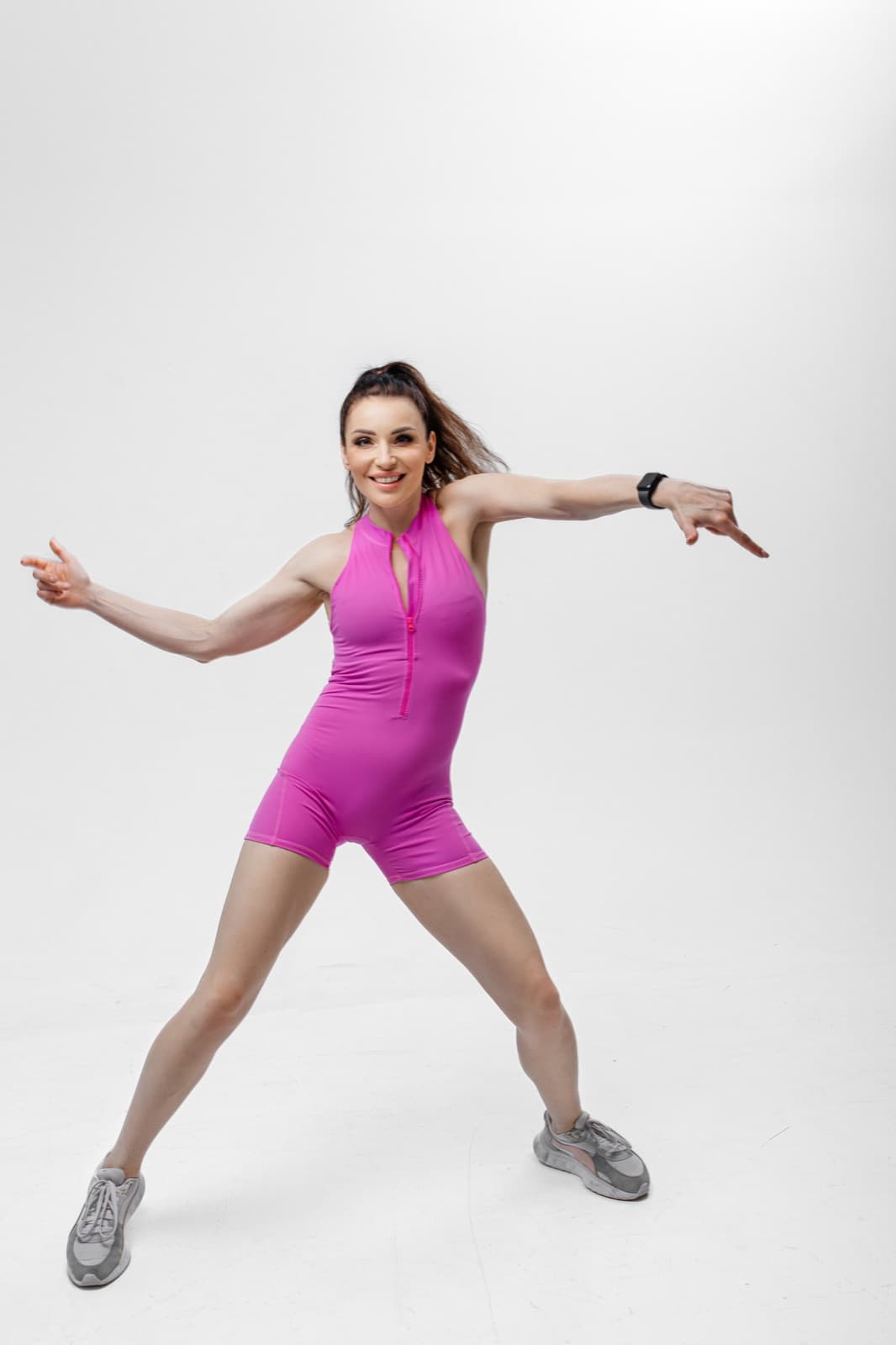
Your first session: what it honestly feels like
The first ten minutes feel awkward. You'll be half a beat behind, your arms and legs will occasionally disagree, and you'll laugh at yourself at least once. This is not a sign it isn't working — it's what learning any new movement feels like, and it fades faster than you expect.
By the end of a 20–30 minute session you'll be genuinely warm and probably sweating — dance workouts are real cardio, not a warm-up pretending to be one. The next day you might feel light muscle soreness in your calves and thighs if you haven't exercised in a while. That's normal and fades in a day or two; sharp pain is not normal and means a move needs softening. One more first-session tip: let the opening minutes be gentler — a good follow-along builds the warm-up in, so don't skip ahead to the fast part cold.
How to make it stick after day one
- Attach it to a time slot. “After the kids are in bed” or “before my shower” beats “when I have time” — which is never.
- Three short sessions beat one heroic one. 15–30 minutes, three or four times a week, is the rhythm that builds a habit. One exhausting hour on Sunday builds a dread. And the rest days in between aren't slacking — they're when the soreness fades and the next session gets easier.
- A missed day is a missed day — nothing more. It doesn't erase progress and it doesn't need to be “made up.” Just do the next session.
- Judge it by how you feel, not the scale. In the first weeks the honest wins are mood, energy, and stamina — those show up long before anything else changes.
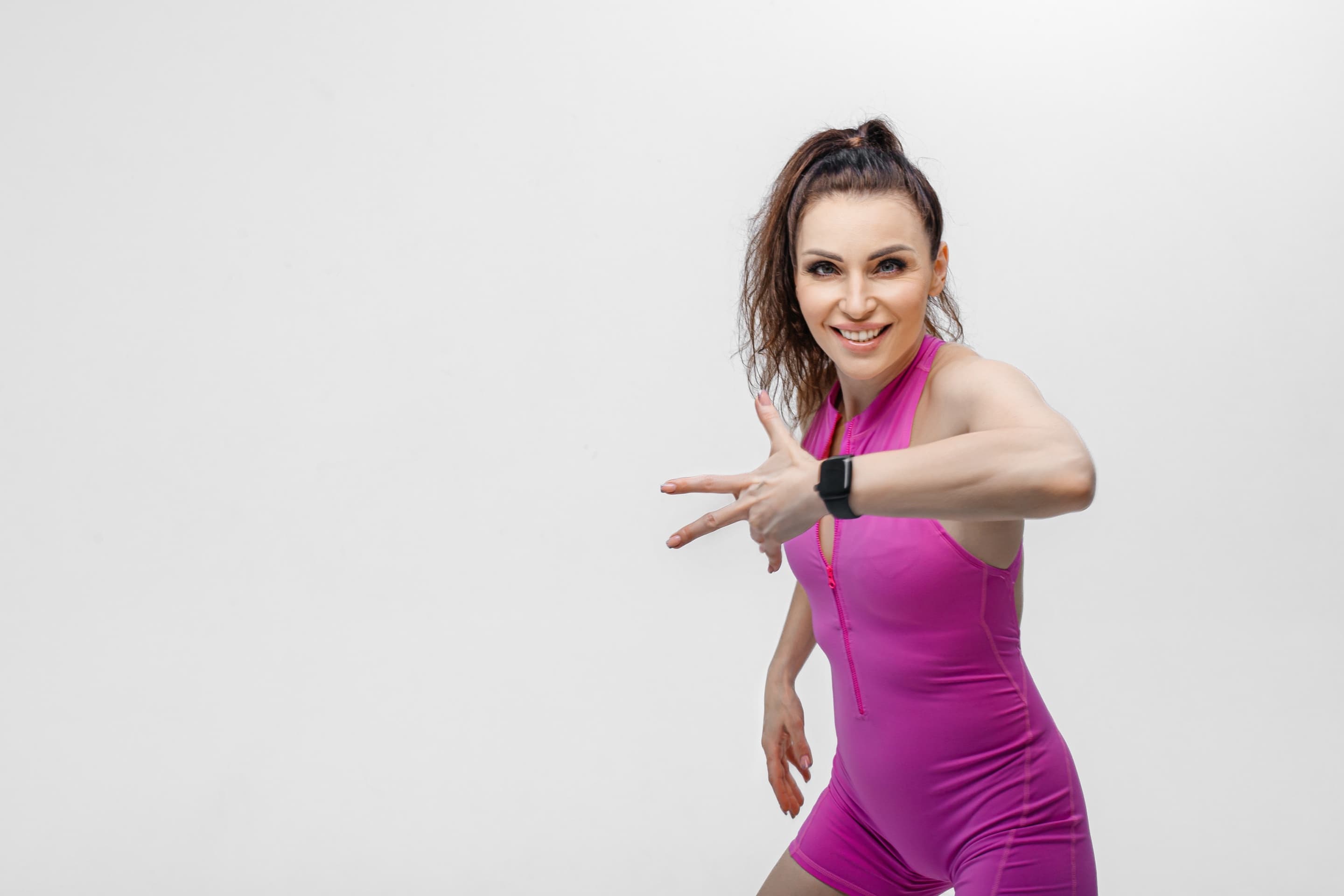
Check out the 21‑Day Dance Challenge
Short, beginner-friendly dance workouts you follow along at home, led by choreographer Anastasiia. The first session is free to watch — no sign-up, just press play and see how it feels.
See the ChallengeCommon questions
- How much space do I need for a dance workout at home?
- About two by two metres — enough to take a step in each direction and stretch your arms out without hitting anything. A living room with the coffee table pushed aside is plenty. You don't need a mirror, a mat, or special flooring.
- What should I wear for my first dance workout?
- Anything stretchy you can move in, plus supportive sneakers. That's it — nobody sees you, so there's no outfit to get right. If you're dancing on a slippery floor, sneakers also keep you stable.
- I have two left feet — can I really do this?
- Yes. Follow-along workouts are not performances: you copy simple moves from a video, and missing a step costs you nothing — the workout keeps going and so do you. Coordination is a skill that improves with repetition, and everyone is clumsy in session one.
- How long should a beginner dance workout be?
- 15–30 minutes is the sweet spot. It's long enough to raise your heart rate and break a sweat, and short enough that you'll actually do it again in two days — which matters far more than the length of any single session.
- Are dance workouts actually effective for beginners?
- Yes — dance-fitness sessions are genuine moderate-intensity cardio, roughly comparable to brisk walking or light jogging depending on how energetic the session is. They also train coordination and balance, which most beginner cardio doesn't.
- Can dance workouts help with weight loss?
- They burn real calories — roughly 150–250 per 30-minute session for most people — but weight loss depends on your whole week, mostly what you eat, not on any single workout. Treat dance as the cardio you'll actually keep doing, not as a fix on its own.